
Let’s be honest. The term “post-quantum cryptography” sounds like something from a sci-fi thriller. And, well, it kind of is. But the threat it addresses is creeping from fiction into our very real, very digital boardrooms.
Here’s the deal: the powerful encryption guarding your most sensitive data—financial records, intellectual property, customer info—relies on math problems too hard for today’s computers. Quantum computers, once mature, could solve those problems in hours. Not years. This isn’t a distant maybe; it’s a “when.” And for enterprise data protection, the clock is ticking.
This article isn’t about fear. It’s a practical guide. We’ll cut through the hype and lay out what post-quantum cryptography (PQC) means for your enterprise data migration strategies and long-term security posture. Think of it as future-proofing your digital vault before someone invents a universal key.
Why the Quantum Countdown Matters for Your Business Now
You might be thinking, “Quantum supremacy is years away. Why panic?” Sure. But there are two immediate, concrete risks that change the calculus.
First, there’s “harvest now, decrypt later.” A sophisticated adversary could be intercepting and storing your encrypted data today, waiting for the day a quantum computer can crack it open. Your ten-year product roadmap or merger details could be in a vault, timer set.
Second, and just as critical, is data longevity. Data you encrypt now—think health records, architectural designs, legal documents—needs to stay confidential for decades. If your encryption can’t withstand future threats, you’re building on digital sand.
Demystifying the Post-Quantum Shift
So, what is post-quantum cryptography, really? In simple terms, it’s a new class of encryption algorithms designed to be secure against both classical and quantum computer attacks. They’re based on different, more complex mathematical problems—think lattice-based cryptography or multivariate equations—that even a quantum machine should find brutally difficult.
The process is already in motion. In 2022, the U.S. National Institute of Standards and Technology (NIST) selected the first group of standardized PQC algorithms. This is a huge deal. It gives the industry a stable, vetted foundation to build on.
The Core Challenge: It’s Not Just a Software Patch
Migrating to post-quantum cryptography isn’t like updating your antivirus. It’s a fundamental overhaul of your cryptographic foundation. The complexity is… significant. You’re dealing with:
- Performance Impacts: Some PQC algorithms have larger key sizes or require more processing power. This can affect everything from TLS handshake times to the load on your IoT devices.
- Crypto-Agility: This is the buzzword you need to know. It’s your ability to swap out cryptographic algorithms without rebuilding your entire system. If you lack it now, migration will be a nightmare.
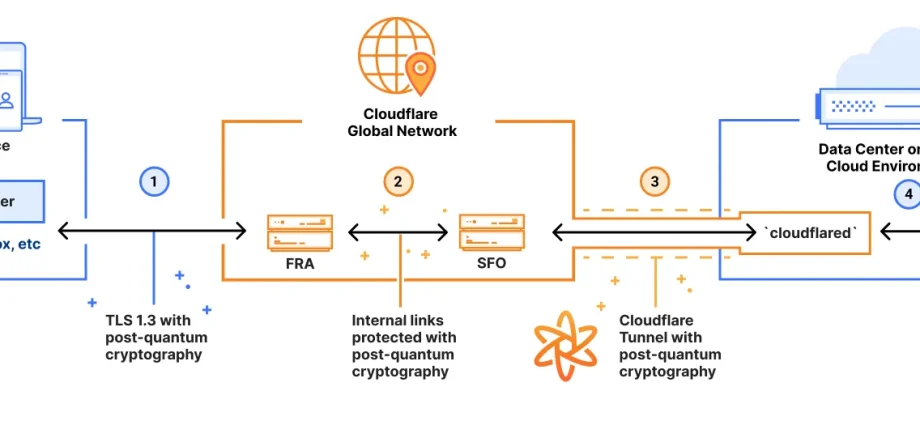
- The Hybrid Approach: The smartest near-term strategy. This means running a new PQC algorithm alongside a traditional one (like RSA). It’s a security blanket—if one is broken, the other still holds.
A Phased Roadmap for Enterprise PQC Migration
Okay, let’s get tactical. How do you actually approach this? A rushed, reactive migration is a recipe for instability and risk. Here’s a more sensible, phased playbook.
Phase 1: Discovery & Inventory (The Crypto Audit)
You can’t protect what you don’t know. This phase is all about mapping your “cryptographic surface.”
- Identify: Where is cryptography used? (SSL/TLS, VPNs, database encryption, digital signatures, code signing).
- Catalog: What specific algorithms and key lengths are in play? Prioritize systems handling long-lived, high-value data.
- Assess: How crypto-agile is each system? Can algorithms be updated via configuration, or does it require a code overhaul?
Phase 2: Prioritization & Planning
Not all data is created equal. Use a risk-based framework to decide what to migrate first. Honestly, this table helps visualize it:
| Priority Tier | Systems/Data Examples | Rationale |
|---|---|---|
| Critical (Migrate First) | Long-term archives, intellectual property, root CA keys, legally protected data. | High value, long shelf-life. Prime target for “harvest now” attacks. |
| High (Migrate Early) | External-facing web services (TLS), VPN gateways, financial transaction data. | High exposure to interception. Essential for maintaining trust. |
| Medium (Schedule Migration) | Internal service communication, legacy application data. | Lower external exposure, but part of overall security posture. |
| Low (Monitor & Update) | Ephemeral data, non-sensitive internal logs. | Minimal risk. Can be addressed with routine tech refresh cycles. |
Phase 3: Pilot & Hybrid Implementation
Start small. Choose a non-critical but visible system—maybe an external portal—and implement a hybrid post-quantum cryptography solution. This pilot is your learning lab. You’ll uncover integration snags, performance hits, and tooling gaps in a controlled environment.
Phase 4: Full-Scale Deployment & Crypto-Agility
Armed with lessons from the pilot, you scale. The ultimate goal here isn’t just to deploy PQC once. It’s to build crypto-agility into your enterprise architecture. Make cryptographic changes a manageable operational task, not a multi-year project.
Integrating PQC into Your Broader Data Protection Strategy
Post-quantum migration shouldn’t happen in a silo. It needs to weave into your existing data protection and governance fabric.
Data Classification becomes more important than ever. Your PQC priorities flow directly from it. And your data loss prevention (DLP) and key management systems? They’ll need to understand and support these new algorithms. Talk to your vendors. Ask about their PQC roadmaps now.
Also—and this is crucial—remember that cryptography is just one layer. A quantum-resistant algorithm won’t save you from phishing, weak passwords, or misconfigured cloud buckets. A defense-in-depth mindset is non-negotiable.
The Human Element: Skills, Training, and Mindset
We talk about systems, but the biggest gap might be in your teams. Do your security architects, developers, and ops engineers understand the post-quantum shift? Probably not yet. Upskilling is a strategic imperative. Invest in training that moves this topic from theoretical to practical.
Foster a culture of crypto-agility. Make it a standard part of your procurement checklists and software development lifecycles. Ask “Is this solution crypto-agile?” as routinely as you ask about multi-factor authentication.
Looking Ahead: This is a Journey, Not a Checkbox
The transition to post-quantum security isn’t a project with a firm end date. It’s an ongoing evolution. New algorithms will emerge. Standards will be refined. Threats will adapt.
Starting your migration journey now isn’t about immediate panic. It’s about prudence. It’s about recognizing that the foundations of our digital world are shifting—slowly, but inexorably. By taking deliberate, phased steps today, you’re not just protecting data. You’re building an enterprise that is resilient, agile, and ready for whatever comes next, in this world or the quantum one on the horizon.